“diseases and pests” search results (400)

World boutique Coffee Manor beans: Hawaiian Kona Coffee (part I) has a smooth and fragrant flavor
Some bloggers mentioned coffee grown in Hainan, China. As far as I know, Mr. Lin Wending, a Taiwanese businessman, grows coffee in Hainan, creates his own brands of antique coffee (synonymous with English Good Sir) and strong coffee (synonymous with Chinese China), and introduces Arabica varieties with high yield and disease resistance from Brazil, which has achieved good results. Hainan Geology belongs to volcanic Red Earth and Coffee famous Kona Coffee of Hawaii
2015-12-22 World boutique coffee manor Hawaii Kona smooth fragrant flavor
Boutique Coffee Costa Rica urgently needs to stimulate the coffee industry
Due to the decline in coffee prices on the international market, Costa Rican coffee exports totaled US $306 million in 2015, down 26% from US $412 million in 2012, Costa Rica reported on May 12. In the first quarter of 2016, the average world price of coffee was $1.14 per liter, down 26 per cent from the same period in 2014. Affected by climate change and diseases and insect pests at the same time, the coffee growing area of Colombia
2016-05-18 Boutique Coffee Costa Rica badly needed stimulation farming Nation
Boutique coffee specialty coffee coffee bean variety
Abstract: coffee trees are generally divided into three categories: Arabica species, Robesta species and Liberika species. With regard to the cultivation of crops, seed selection is a very important factor. Every year, agronomists are studying higher quality and higher yield varieties of wheat, soybeans and corn, as well as how to make apples more delicious, beautiful and resistant to diseases and insect pests. in fact, the same is true of coffee.
2016-05-04 Boutique coffee specialty coffee beans varieties
Three primary coffee beans
Arabica: Origin of Ethiopia, equivalent to the rich and handsome coffee beans, belong to the precious coffee beans. It is grown at an altitude of 700-2000 meters and accounts for 75-80% of the world's coffee production. It has excellent flavor and aroma, low caffeine content, caffeine content of about 1-1.5% of its weight, but for drying, frost, disease
2016-08-30 coffee three big original bean seed rabbi card seed
Robusta's secret.
[guide] "Robusta" coffee, commonly known as "thick beans", can be grown at low elevations (200 to 800 meters above sea level), has strong resistance to diseases and insect pests, is not vulnerable to agricultural pests, has a high annual output per unit area, and is harvested in large quantities by machine. in general, the cost of production is much lower than that of Arabica. "Robusta" coffee is commonly known as "stout beans", at low elevations (200 above sea level)
2015-11-13 Rob Booth unknown secret.
Robusta's secret.
[guide] "Robusta" coffee, commonly known as "thick beans", can be grown at low elevations (200 to 800 meters above sea level), has strong resistance to diseases and insect pests, is not vulnerable to agricultural pests, has a high annual output per unit area, and is harvested in large quantities by machine. in general, the cost of production is much lower than that of Arabica. "Robusta" coffee is commonly known as "stout beans", at low elevations (200 above sea level)
2015-11-13 Rob Booth unknown secret.
Robusta's secret.
[guide] "Robusta" coffee, commonly known as "thick beans", can be grown at low elevations (200 to 800 meters above sea level), has strong resistance to diseases and insect pests, is not vulnerable to agricultural pests, has a high annual output per unit area, and is harvested in large quantities by machine. in general, the cost of production is much lower than that of Arabica. "Robusta" coffee is commonly known as "stout beans", at low elevations (200 above sea level)
2015-11-13 Rob Booth unknown secret.
The National Union of Central and South American Coffee Diseases lend a helping hand.
The outbreak of coffee leaf rust in the coffee producing areas of Central and South America began at the end of last year, resulting in a reduction in local coffee production, which has seriously affected the local people's livelihood and economic industry. The National Cooperation Council of the Ministry of Foreign Affairs said that domestic plant pathologists have been invited to local friends to learn about the situation, and a regional plan will be planned to provide prevention and control assistance to friendly farmers through a combination of technology and funds.
2014-04-27 Central and South America Coffee infected Union helping hands producing areas end of last year
Strong Java Coffee Flavor description method introduction to the price of high-quality coffee beans
Java produces only a small amount of Arabica beans, most of which were imported from Africa after the rust disaster. This coffee has a strong bitter taste after roasting, but the aroma is extremely light. Although the acidity is low and the taste is delicate, it is rarely used for direct drinking. It is often used to mix mixed coffee or to make instant coffee. Diseases and insect pests are really a powerful thing, it makes Pakistan
2016-10-13 Taste strong Java coffee flavor description processing price boutique coffee beans
The coffee producing area of Tanzania
Due to political instability and rampant diseases and insect pests, the coffee industry in Tanzania has been damaged, leading to a decline in the overall level of coffee and instability in quality, which in turn lead to lower prices, which are usually the result of a further decline in the coffee industry. What's more, it is estimated that more than 12% of the Arabica coffee grown in northern Tanzania from 1969 to 1985 was smuggled.
2015-02-16 Global coffee origin Tanzania due to political instability coupled with diseases and insect pests
The best coffee in the world
When tasting single-origin coffee, you will see some information about the variety in addition to the country of origin, production area and geographical and climatic conditions. Arabica, Robosta, Bourbon, etc. For coffee flavor, of course, the difference in the production area is relatively large. Variety differences become interesting when discussing the variety of beans produced in the same region.
2014-11-19 Coffee knowledge Fine coffee learning Coffee varieties
Yemeni farmers abandon coffee
Experts point out that if the trend of farmers abandoning coffee and planting Carter grass is not improved, Yemeni coffee will have no tomorrow. Experts concluded that the reasons for the disadvantages of coffee crops are as follows: drought and water shortage, lack of advanced irrigation systems, increased planting costs, serious diseases and insect pests, cheaper imported coffee and better profits than coffee. It seems that the problem is very complicated. It may be difficult to increase coffee production in Yemen in a short period of time.
2015-04-01 Yemen farmers abandoned seeds coffee experts pointed out that farmers replanted.
Yemeni farmers abandon coffee
Experts point out that if the trend of farmers abandoning coffee and planting Carter grass is not improved, Yemeni coffee will have no tomorrow. Experts concluded that the reasons for the disadvantages of coffee crops are as follows: drought and water shortage, lack of advanced irrigation systems, increased planting costs, serious diseases and insect pests, cheaper imported coffee and better profits than coffee. It seems that the problem is very complicated. It may be difficult to increase coffee production in Yemen in a short period of time.
2015-10-22 Yemen farmers abandoned seeds coffee experts pointed out that farmers replanted.
The planting conditions of coffee trees the types of coffee trees
The Robastian coffee tree, which originated in the Congo in Africa, accounts for about 20% of the world's production. 30%. Robasta coffee tree is suitable for planting in the lowlands below 500 meters above sea level, has strong adaptability to the environment, can resist bad climate, resist diseases and insect pests, and does not need much manual care during soil preparation, weeding and pruning, and can be allowed to grow in the wild. It is easy to cultivate.
2016-06-06 Coffee cultivation conditions species Robbas Bath Origin Africa just
The proportion of coffee powder to water in the variety of fine coffee.
Produced in Brazil and is a hybrid of Bourbon and Sumatra. Strong environmental adaptability, resistance to diseases and insect pests, high yield. Trees up to more than three meters high should not be harvested, the taste is more balanced, the taste is close to the traditional varieties. Catuai Carduwey is an excellent variety, which is suitable for the severe climate at high altitude and has high yield. it was first produced in Brazil and is a hybrid of caturra and mondu nove.
2016-06-08 Boutique coffee variety coffee powder proportion
Basic knowledge about coffee trees
Breed of coffee: When you taste single-origin coffee, you will see some information about the variety in addition to the country of origin, production area and geographical and climatic conditions. Arabica, Robosta, Bourbon, etc. For coffee flavor, of course, the difference in the production area is relatively large. When it comes to different varieties of beans produced in the same locality, the differences between varieties change.
2014-12-26 Boutique Coffee Basics Common sense About Foreword Tasting Single item Except
Introduction of Coffee Encyclopedia Coffee
The kind of coffee [preface]: when tasting individual coffee, you will see some information about the variety in addition to the producing country, producing area, geographical and climatic conditions. Such as Arabica, Robusta, Bourbon and so on. As far as the flavor of coffee is concerned, the difference in producing areas certainly has a greater impact on the flavor of coffee. When it comes to different varieties of beans produced in the same place, the differences between varieties change.
2014-09-28 Coffee knowledge coffee varieties coffee encyclopedia
Characteristics of Tanzanian coffee flavor of Tanzania coffee
Due to political instability and rampant diseases and insect pests, the coffee industry in Tanzania has been damaged, leading to a decline in the overall level of coffee and instability in quality, which in turn lead to lower prices, which are usually the result of a further decline in the coffee industry. What's more, it is estimated that more than 12% of the Arabica coffee grown in northern Tanzania from 1969 to 1985 has gone.
2016-08-30 Tanzania coffee characteristics flavor due to political situation instability coupled with diseases and insect pests
Guava Plain Manor in Guatemala New Oriental region Liquor-scented Coffee treated by the Sun
The SL28 variety is extremely rare in Central America. It originated from Lake Tanganyika in East Africa. It was discovered in 1931. It has broad and reddish leaves, can adapt to high altitude environment, and has excellent drought and disease resistance. It also has higher yield than traditional tree species and is unique in flavor. 1935 Scott Coffee Lab Scottish Labo
2016-06-22 Guatemala New Oriental producing areas guava plains manors wine sun treatment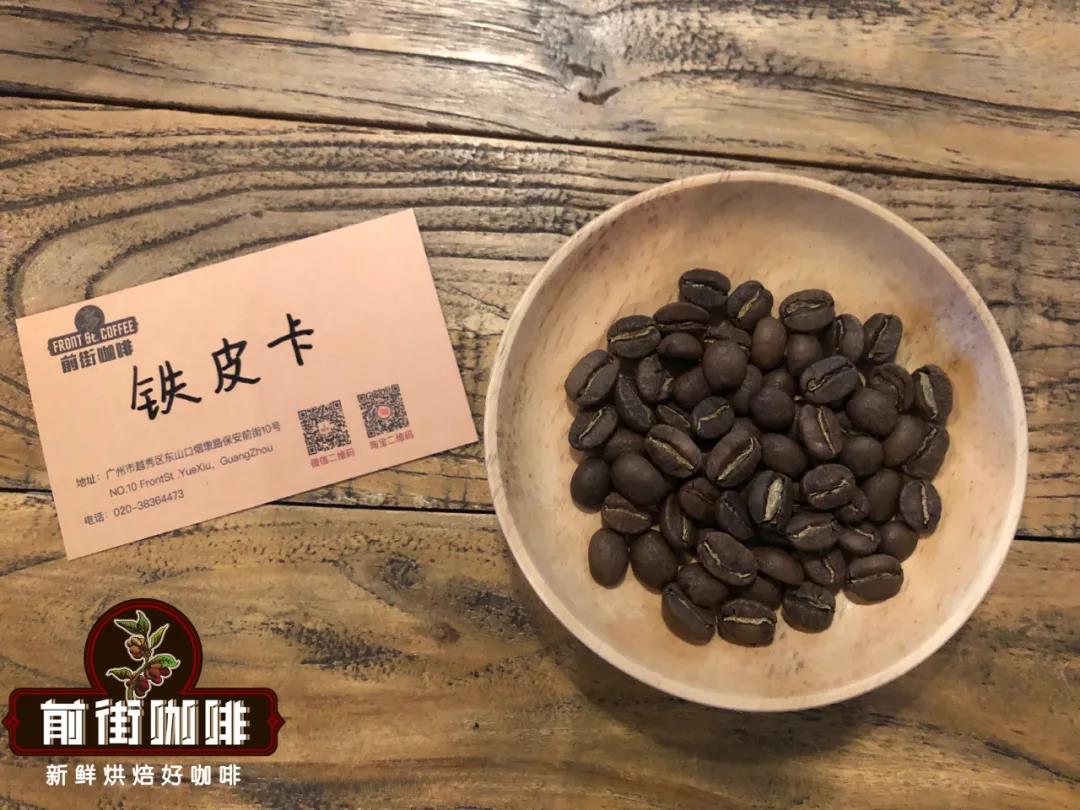
The most classic high-quality Arabica variety of tin coffee flavor introduction
Catimor: Catimor is not purely Arabica, it is a hybrid of Timor species (belonging to Robusta species) and caturra(a variant of Popan species), so catimor has 25% Robusta lineage, and its Robusta lineage also determines its taste defects: aroma is not rich enough, and the overall taste is bitter, prone to astringent and pungent
2016-07-05 classic quality rabbi kind pickup coffee flavor taste presentation tim